
Agrorendement is a management and variable-rate nitrogen fertilization solution developed by Wanaka.
Designed for soft wheat, barley, and oilseed rape, it relies on remote sensing, modeling, and agronomic expertise to adjust nitrogen application rates to the actual potential of each field.
The objective: improve economic performance while reducing environmental impact.
Agrorendement combines management and variable-rate application to adjust nitrogen rates as accurately as possible, based on the crop’s actual potential and within-field variability.
The objective: achieve optimal yield with the best techno-economic efficiency.
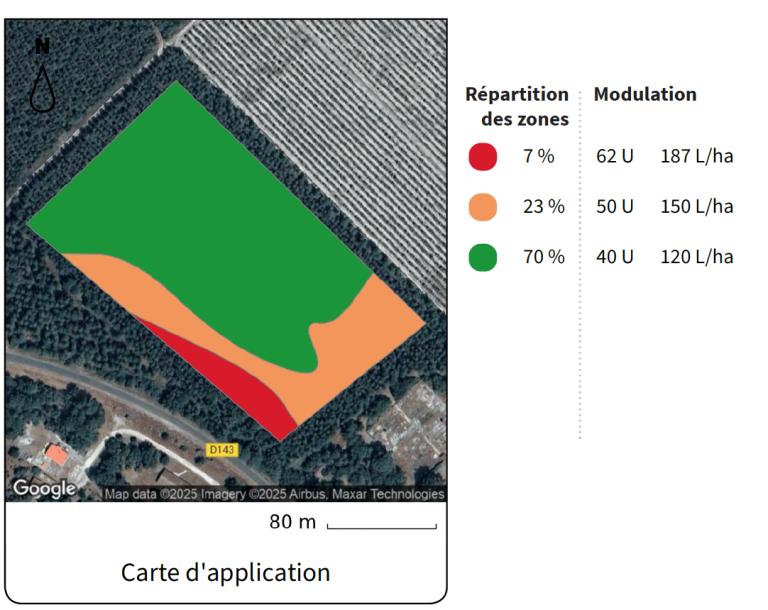
Determine the rate for each application based on biomass, crop growth stage, and yield forecasts.
With three distinct models, WANAKA enables visualization of growth dynamics and anticipation of the real nitrogen requirements of cereal crops at straw stage, for N2, N3, or DFE (final application).
Intelligently distribute nitrogen across the field: reinforce high-potential zones and reduce applications where crop demand is lower.
Variable-rate application improves the efficiency of each unit of nitrogen, reduces losses, and helps homogenize the crop.
WANAKA adapts the variable-rate strategy—compensation or reinforcement—according to the crop growth stage.
+3.2 qx/ha on average
+€103/ha of overall economic gain
+13 units of nitrogen used on average compared to the initial plan
Improved yield expression in high-potential zones
Reduced within-field variability
Centre region:
PPF → 200 units for 72 qx / Wanaka → 245 units for 80 qx
Gain: +€184/ha
Hauts-de-France:
PPF → 180 units for 64 qx / Wanaka → 170 units for 66 qx
Gain: +€46/ha
Agrorendement is a pragmatic approach to producing more, better, and more sustainably, by leveraging data to guide every agronomic decision.
For barley, Agroyield is based on two complementary levers: adjustingthe pivot rate and within-field variable-rate application..
This approach makes it possible to adapt fertilization to actual crop growth conditions and the potential of each zone within the field.
The rate is calculated based on the observed crop status using remote sensing and canopy indices.
It relies on a robust reference framework built from neighboring fields with similar conditions (crop, variety, sowing date).
The adjustment is carried out at the beginning or end of stem elongation to fine-tune nitrogen inputs according to growth dynamics.
Determine the rate for each application based on biomass, crop growth stage, and yield forecasts.
Management makes it possible to visualize growth dynamics and anticipate the actual nitrogen needs of barley, particularly for the final application between N2 and N3.
Once the overall rate has been determined, variable-rate application distributes nitrogen within the field:
more nitrogen in high-potential zones, less in areas with limited development.
Result : improved input efficiency, reduced losses, and a more uniform crop.
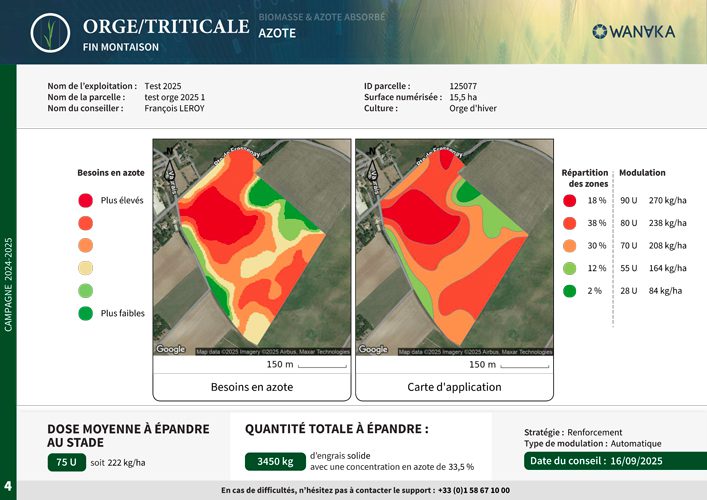
Agroyield for barley guarantees more precise, more uniform, and more profitable fertilization, while respecting agronomic balances.
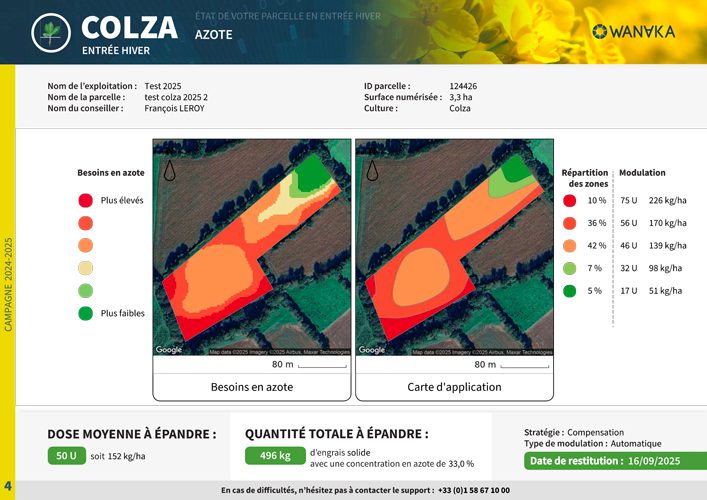
Agroyield adapts oilseed rape fertilization based on the actual biomass observed at the beginning and end of winter.
The combination of management and variable-rate application allows precise targeting of nitrogen requirements, taking into account crop potential and development throughout the growing cycle.
Management determines the total nitrogen rate to apply based on measured biomass and yield objectives. This approach makes it possible to fine-tune fertilization to achieve the right balance between nutrition and productivity, while limiting nitrogen losses.
Variable-rate application distributes the total rate according to the different zones within the field.
High-potential zones receive targeted reinforcement, while lower-potential zones benefit from reduced applications.
Result improved crop uniformity and an optimized nitrogen-to-yield ratio.
–34 units of nitrogen/ha on average compared to the initial plan
+4.9 qx/ha on average
+€107/ha/year of overall economic gain
Better yield expression in reinforced zones.
Reduced nitrogen losses in low-potential areas.
Brittany (22):
PPF → 180 units / Wanaka → 65 units
Fertilizer savings: +€161 / yield: –€44 / positive overall gain
Grand Est (68):
PPF → 180 units / Wanaka → 220 units
Fertilizer cost: –€56 / yield: +€154 / overall gain: +€98
Agroyield for oilseed rape ensures precise management, effective variable-rate application, and controlled yields, while reducing losses and optimizing every unit of nitrogen.
The online platform allows users to:
A mobile application is also available for on-the-go monitoring.
PhytoProTech is a Decision Support Tool (DST) developed by Wanaka to model crop protection risks at field scale.
By combining high-resolution weather data, phenological models, and plant pathology models, PhytoProTech helps apply treatments at the right time, in the right place, and with the right strategy.
Objective : reduce inputs while securing crop protection for wheat, barley, and sugar beet.
PhytoProTech is a decision support tool developed by Wanaka to anticipate crop protection risks at field level.
Thanks to disease modeling based on high-precision meteorological data, it allows interventions to be adjusted at the right time and focused on zones that are genuinely at risk.
PhytoProTech is built on four pillars:
Objective: targeted protection, optimized treatments, and a measurable reduction in inputs.
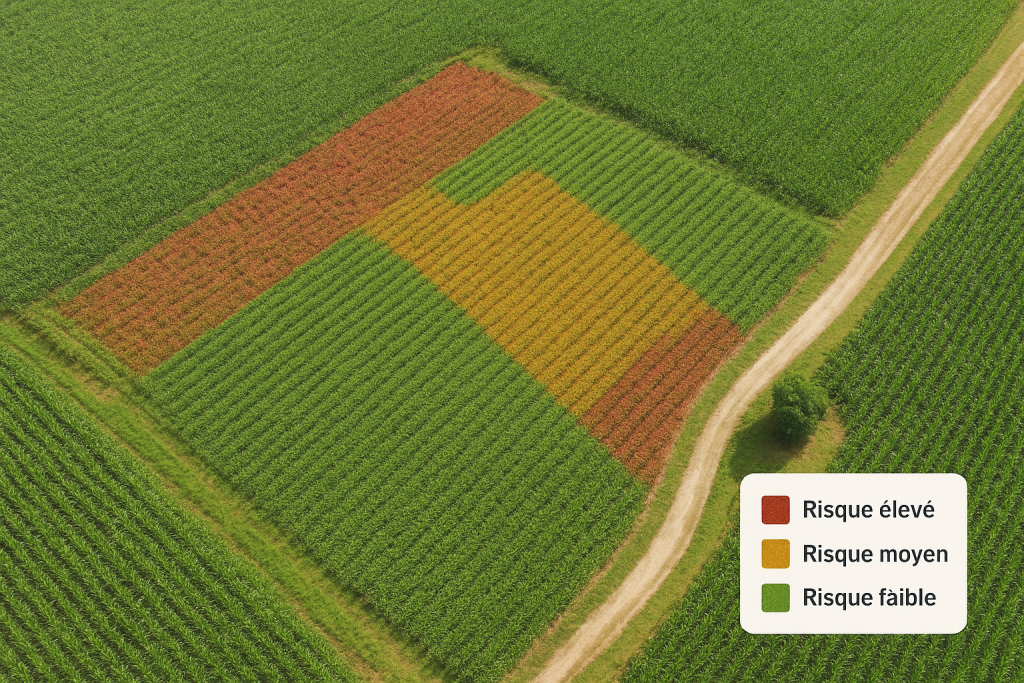
PhytoProTech covers the main arable crops:
Soft wheat, durum wheat, winter and spring barley, sugar beet.
It enables monitoring of the most significant diseases:
Each disease risk is modeled in real time based on climatic conditions and the crop growth stage.
Users receive SMS alerts, emails, or notifications depending on the risk level (low, medium, high).
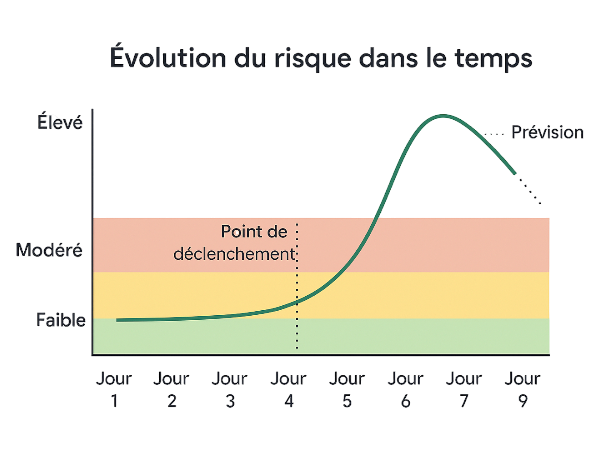
Users have access to an online and mobile dashboard.
The online platform allows users to:
A mobile application is also available for on-the-go monitoring.
Wanaka provides farmers with a comprehensive soil mapping and variable-rate seeding service, designed to adapt seeding density and fertilization to the actual potential of each zone within the field.
A precise, measurable and sustainable approach, that improves crop uniformity, yield performance, and input efficiency from the very first stage of crop establishment.
Soil zoning is the first step in precision seeding.
Based on aerial imagery of bare soil fields, an analysis differentiates zones according to their texture, structure, and agronomic potential.
Each zone is then integrated into a reference agronomic map.
Objectives:
Once the soil map has been created, variable-rate seeding allows seeding density to be adapted to each identified zone.
The system generates an automatic seeding map compatible with market-leading seeding consoles and equipment (up to 6 density zones).
Benefits:
Wanaka provides end-to-end support at every stage:
Together, let’s build a precise, sustainable, and high-performing agriculture — from the very first seed.
WANAKA works closely with its distributors and successfully enables them to:
Today, more than 60% of WANAKA recommendations are delivered under other brands and through third-party platforms such as:


From order placement to final results, users remain within their own environment and can customize every step of the process.
WANAKA positions itself as a technology provider for these platforms, complementing their service and feature offerings.
Through a very easy-to-use API, WANAKA provides access to the full range of its data — from raw indices to fully digitized recommendations, including calculated indicators.
This enables partner users to request, for their fields, only an absorbed nitrogen rate, biomass, or any other indicator, allowing field monitoring over time without having to generate a full recommendation.
Example of wheat monitoring generated via the API:
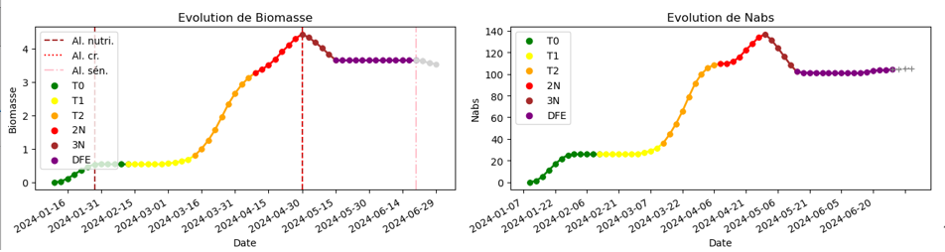
* Modeling powered by WANAKA AI
Example of oilseed rape monitoring generated via the API:
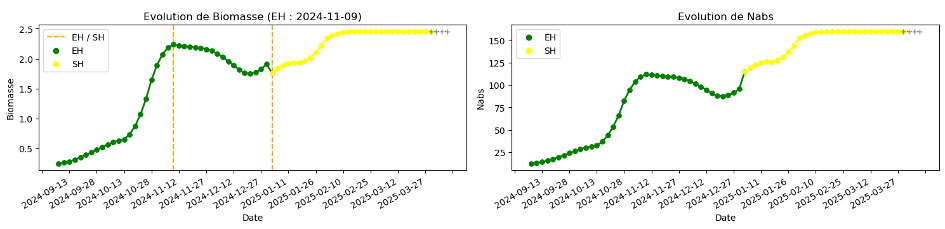
* Modeling powered by WANAKA AI
For partners wishing to customize all delivered recommendations, these are provided in fully digitized form.
Maps, indicators, and results can then be integrated and customized without limitation.